

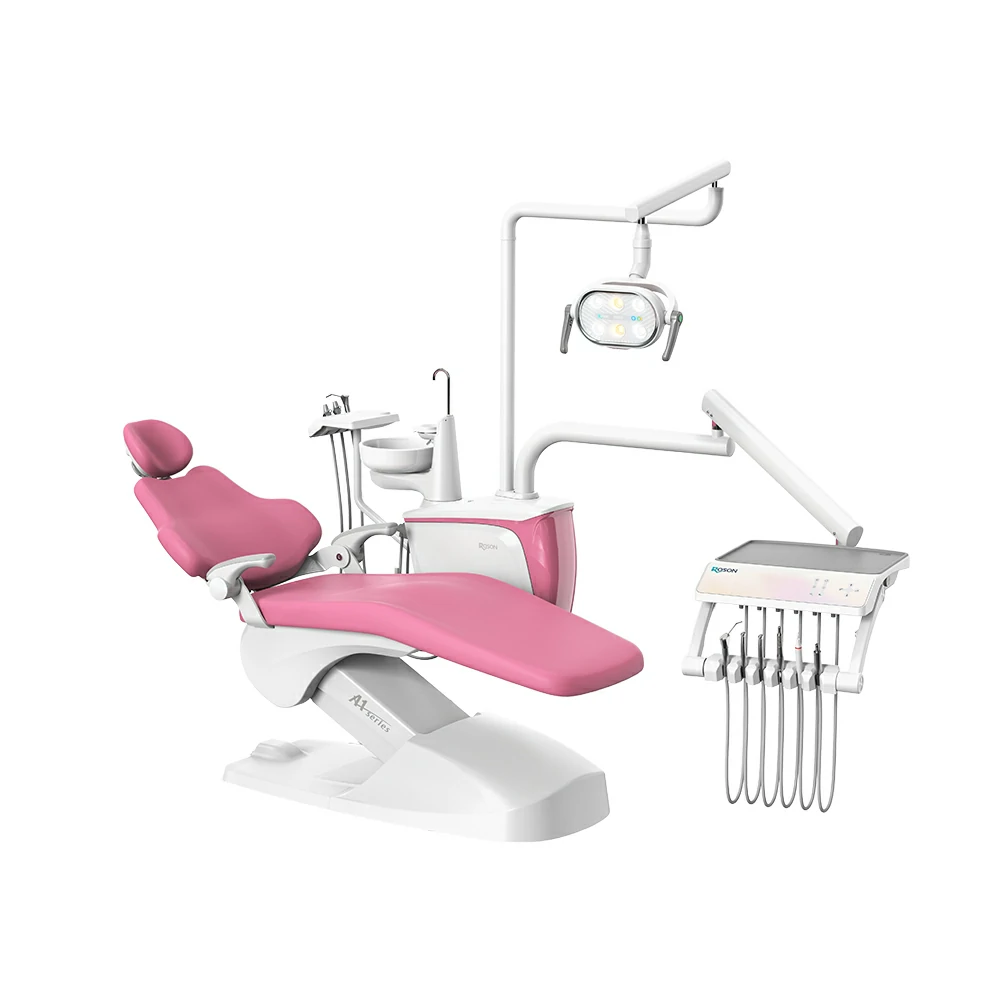
Choosing a dental treatment chair becomes difficult when every model appears to offer a similar combination of movement, upholstery, controls, and integrated equipment. The real selection problem is different: which chair will allow a particular practice to treat patients comfortably without forcing dentists and assistants to change the way they work?
That question should guide the entire purchasing process. Instead of starting with a product catalog, the practice can begin with its treatment rooms, procedures, clinician habits, and patient requirements. The most suitable dental chair is then the one that fits those conditions with the fewest compromises.
Let the Practice Define the Chair
A practice treating mostly general dentistry patients may have very different requirements from one focused on endodontics, surgery, orthodontics, or pediatric care. The frequency of procedures, number of operators, and typical treatment positions all influence what the chair needs to do.
Before comparing models, the clinic should identify its most common treatment scenarios. Which procedures occupy most of the working day? Does the dentist frequently change the patient’s position? Does the assistant need continuous access to instruments? Answers to these questions establish the practical specification before a supplier’s features enter the discussion.
Watch What Happens Around the Patient
Chair selection becomes clearer when the complete treatment movement is observed. During a typical procedure, the dentist approaches the patient from different angles, the assistant reaches for instruments, and the patient may be repositioned several times.
A useful evaluation therefore looks beyond the seat itself. The buyer should observe whether the backrest, headrest, delivery system, light, and instrument tray interfere with those movements. A model that performs well in isolation may be less suitable once the entire working area is considered.
Choose the Chair Around the Dentist’s Working Position
Dentists do not treat patients from one fixed position. Access requirements change according to the tooth being treated and the procedure being performed. The selected dental treatment chair should therefore make common working positions easy to achieve.
Headrest adjustment and backrest movement deserve particular attention because they influence access to the oral cavity. Roson presents multiple dental-unit configurations designed around clinical positioning and ergonomic use, giving buyers different layouts to compare rather than forcing every practice into one arrangement.
The useful test is simple: simulate several routine procedures and determine whether the clinician can obtain the desired working position without unnecessary repositioning.
Treat Delivery Configuration as a Workflow Decision
The location from which instruments are delivered can change the entire treatment rhythm. An over-the-patient arrangement, for example, creates a different reach pattern from a side-mounted or other delivery configuration.
For this reason, delivery should be selected together with the chair rather than afterward. Current Roson product information presents different mounting options and configurations, allowing the treatment area to be organized around the intended working style.
The right question is not which delivery arrangement looks most advanced. It is which arrangement keeps frequently used instruments accessible while leaving sufficient working space around the patient.
Decide How Much Movement the Chair Really Needs
A treatment chair’s movement functions should be judged according to how often they will actually be used. Rapid, predictable positioning can be valuable in a busy practice, but unnecessary controls can add complexity without improving treatment.
Buyers should operate the chair through several complete positioning cycles. Foot controls, programmed positions, backrest movement, headrest adjustment, and other controls should be tested as they would be during treatment.
Roson lists functions such as smooth start-and-stop movement, foot control, and treatment-position controls within its dental-unit range. The important issue for a practice is whether those functions make positioning easier in its own workflow.
Check Whether the Room and Chair Work as One System
A chair does not occupy empty space. Its footprint interacts with the delivery system, dentist’s stool, assistant’s position, cabinetry, dental light, and patient entry path.
Before ordering, the practice should measure the treatment room and map the intended equipment positions. Installation requirements and utility connections should also be confirmed for the selected configuration.
This step can prevent a common purchasing mistake: choosing a chair that works well clinically but leaves insufficient space for the people and equipment that must operate around it.
Consider What the Patient Experiences During Treatment
Patients judge a treatment chair differently from clinicians. Their concerns include getting onto the chair, being positioned, remaining stable during treatment, and experiencing repeated movement without unnecessary discomfort.
Upholstery, head support, armrest design, and positioning should therefore be evaluated from the patient’s perspective as well as the operator’s. Roson’s dental-unit range includes different upholstery and configuration choices, which can be assessed according to the practice’s patient profile and treatment environment.
Patient comfort should not, however, be considered separately from clinical access. A useful chair has to accommodate both requirements simultaneously.
Remove Features That Do Not Solve a Real Problem
A long feature list can make a chair appear attractive, but more functions do not necessarily make a better purchase. Each option should answer a practical question.
If a feature does not improve positioning, instrument access, treatment efficiency, patient handling, cleaning, or another clearly identified task, the practice should question whether it needs that option. A focused configuration can be easier to operate and may provide a clearer basis for comparing quotations.
The same principle applies to accessories. Roson offers dental units with options involving handpieces, scalers, curing lights, electric motors, and other integrated functions. Buyers should select them according to actual procedures rather than assuming every available option is necessary.
Put the Supplier Through the Same Test as the Chair
The equipment itself is only one part of the purchase. The manufacturer or supplier also needs to demonstrate that it can support the selected configuration after the order is placed.
A dental chair purchase should therefore involve questions about installation instructions, operation documentation, maintenance information, spare parts, warranty arrangements, and technical communication. The buyer should also confirm which services apply specifically to the chosen model and destination market.
Roson provides product information and technical resources through its website, giving prospective buyers a starting point for verifying model details and support arrangements.
Make the Selection From a Real Treatment Scenario
The final comparison should not take place only on a specification sheet. A dentist and assistant can select two or three shortlisted models and recreate a typical treatment sequence.
Start with patient entry, move through positioning, simulate instrument access, change the patient’s working angle, operate the controls, and consider how the room remains accessible throughout the procedure. That exercise exposes differences that may not be obvious in photographs.
A dental treatment chair is ultimately a working platform, not simply a piece of furniture. Roson can be considered alongside other manufacturers by comparing its specific configurations, documentation, and support against the practice’s requirements rather than relying on brand reputation alone.
The best choice is therefore the chair that disappears into the workflow: the dentist can reach the treatment area naturally, the assistant can work without unnecessary obstruction, the patient can be positioned appropriately, and the equipment fits the room without creating avoidable compromises. Starting with those real conditions gives the practice a much stronger basis for selecting the right model than choosing from a list of advertised features.
