

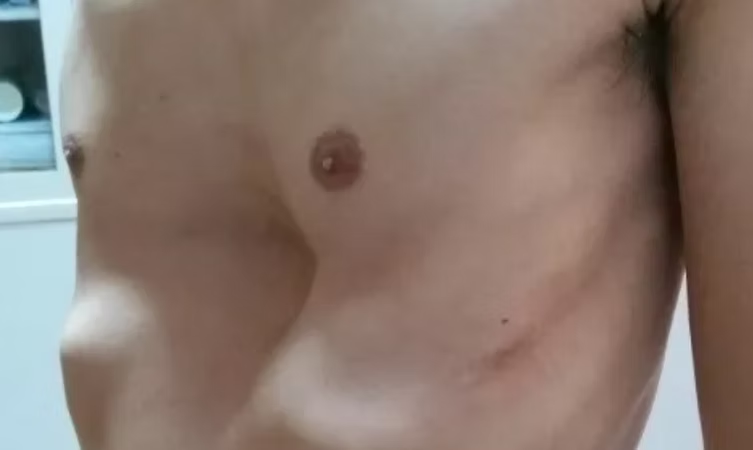
For many individuals, the initial concern with pectus excavatum is its appearance. However, as the deformity progressively worsens and clinical symptoms emerge, the focus often shifts toward the long-term physical consequences of leaving the “sunken chest” uncorrected. Although pectus excavatum is usually not life-threatening, in some cases, severe pectus excavatum may contribute to gradual cardiopulmonary or skeletal changes.
Risks of Untreated Severe Pectus Excavatum
The primary risk of untreated severe pectus excavatum originates from the persistent compression of the heart and lungs. In moderate to severe cases, the chest depression reduces thoracic volume, limiting lung expansion and often shifting the heart toward the left. In rare cases, the heart may be restricted from moving freely, potentially causing symptoms such as palpitations, chest tightness, shortness of breath, and other discomforts. Over time, chronic chest depression may also be accompanied by spinal deformities such as scoliosis and affect the digestive system, causing symptoms like poor appetite or indigestion.
As patients age and the bones calcify, the chest deformity typically deepens, markedly increasing the difficulty and risks of surgical correction. Early assessment and appropriate pectus excavatum treatments ensure superior surgical outcomes, prevent complications such as scoliosis, and improve patients’ physical and psychological well-being.
Improving Quality of Life at The Institute of Chest Wall Surgery (ICWS)
Early surgical intervention helps restore chest wall contour, relieve symptoms and shorten recovery time, allowing patients to resume normal life sooner. The Institute of Chest Wall Surgery (ICWS) provides advanced surgical options tailored to each patient’s condition.
They utilize the Wang procedure, a minimally invasive technique that lifts the depressed bony structures using steel wires and secures them to a shaping bar. This method completely avoids direct contact with the heart, thereby eliminating the potential risk of cardiac injury, and achieves minimal risks and improved corrective outcomes compared to the traditional Nuss procedure.
The Wung procedure is a modified version of the traditional Nuss procedure. While it also utilizes the lever principle, it incorporates a number of technical innovations that help reduce the common complications and risks accompanied by the standard Nuss procedure.
Conclusion
If left untreated, severe pectus excavatum may affect physical performance and, over time, can lead to worsening cardiopulmonary symptoms and complications such as scoliosis. A comprehensive medical evaluation helps determine the severity of the condition and formulate a suitable surgical plan, enabling patients to make informed decisions and effectively manage their long-term cardiovascular and respiratory health.
