

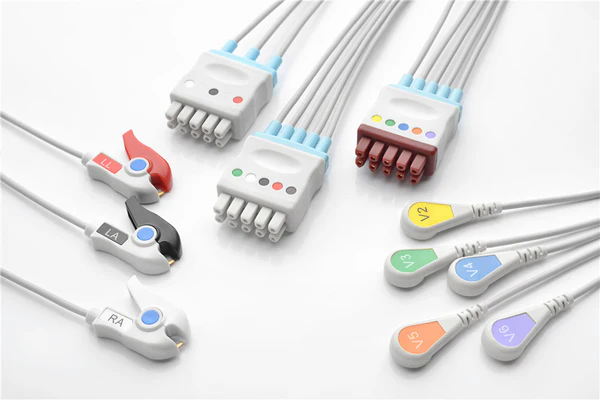
In the operating room (OR), the ability to obtain accurate and clear ECG signals is critical for patient monitoring. One key factor in achieving this is selecting the right shielding for lead wire ECG systems, especially when working with sensitive equipment like 3-lead ECG cables. Proper shielding reduces electrical interference and ensures the reliability of ECG signals during surgical procedures.
The Importance of Shielding in ECG Lead Wires
Electromagnetic interference (EMI) from various medical devices in the OR can cause noise in ECG signals, which compromises diagnostic accuracy. Shielding is used to protect ECG lead wires from external noise, ensuring that the ECG readings are clear and uninterrupted. When choosing the appropriate shielding for lead wire ECG systems, manufacturers must consider factors such as the types of interference in the OR and the specific requirements of the monitoring equipment.
Types of Shielding Materials for ECG Lead Wires
There are various shielding materials available for ECG cables, each with different capabilities to block interference. Common materials include braided copper, tinned copper, and aluminum foil. These materials offer different levels of protection, with braided copper being particularly effective for high-frequency interference. Unimed, for example, uses high-quality shielding materials in their 3-lead ECG cables to ensure optimal signal integrity even in electrically noisy environments like the OR.
How Shielding Affects Signal Quality
The quality of shielding directly impacts the accuracy of ECG signals. Inadequate shielding can result in distorted or noisy signals, which can lead to misinterpretation and delay critical interventions. High-quality shielding ensures that the signals remain pure and accurate, which is crucial for patient safety in the operating room.
Conclusion
When selecting shielding for lead wire ECG systems, especially in the operating room, it is essential to consider the material’s ability to block electrical interference and maintain signal clarity. By choosing the right shielding, such as those used in Unimed‘s 3-lead ECG cables, medical professionals can rely on precise, low-noise ECG readings, ensuring better outcomes for patients.
